Documentation wearing a salesman costume

How the forge actually works

Enough depth for people who care how the sausage is made — and enough clarity for people who only care that their story feels alive. Skim the table of contents or read straight through.

Your models, your quality bar

FableForge does not lock you to one brain in the sky. You choose the language model. The engine is designed so capable local models already do a strong job — which matters for privacy, cost, and offline play.

Prefer a heavyweight? Point the same game at a frontier model through OpenRouter (or another OpenAI-compatible endpoint) — Grok, Claude, and other big hitters included. The quality of dialogue, planning, and memory writing rises with the model you plug in. Same loop. Your call.
How locations are made

The world is a nest of places, not a flat list. FableForge thinks in five levels, from broad to intimate:

  • Level 5 — the big map (a city, a realm, a station)
  • Level 4 — major districts or regions
  • Level 3 — neighborhoods, compounds, notable sites
  • Level 2 — buildings and large interiors
  • Level 1 — rooms and the spaces you stand in

At levels 5 and 3, the forge writes a short planning document first — a “blueprint” of what should exist underneath — before painting individual places. That is why a cyberpunk district still feels like the same city two hours later: the structure was agreed before the wallpaper.

Each place carries description, exits, and image tags so backgrounds stay on-theme when you move, regenerate, or share a location pack with someone else.

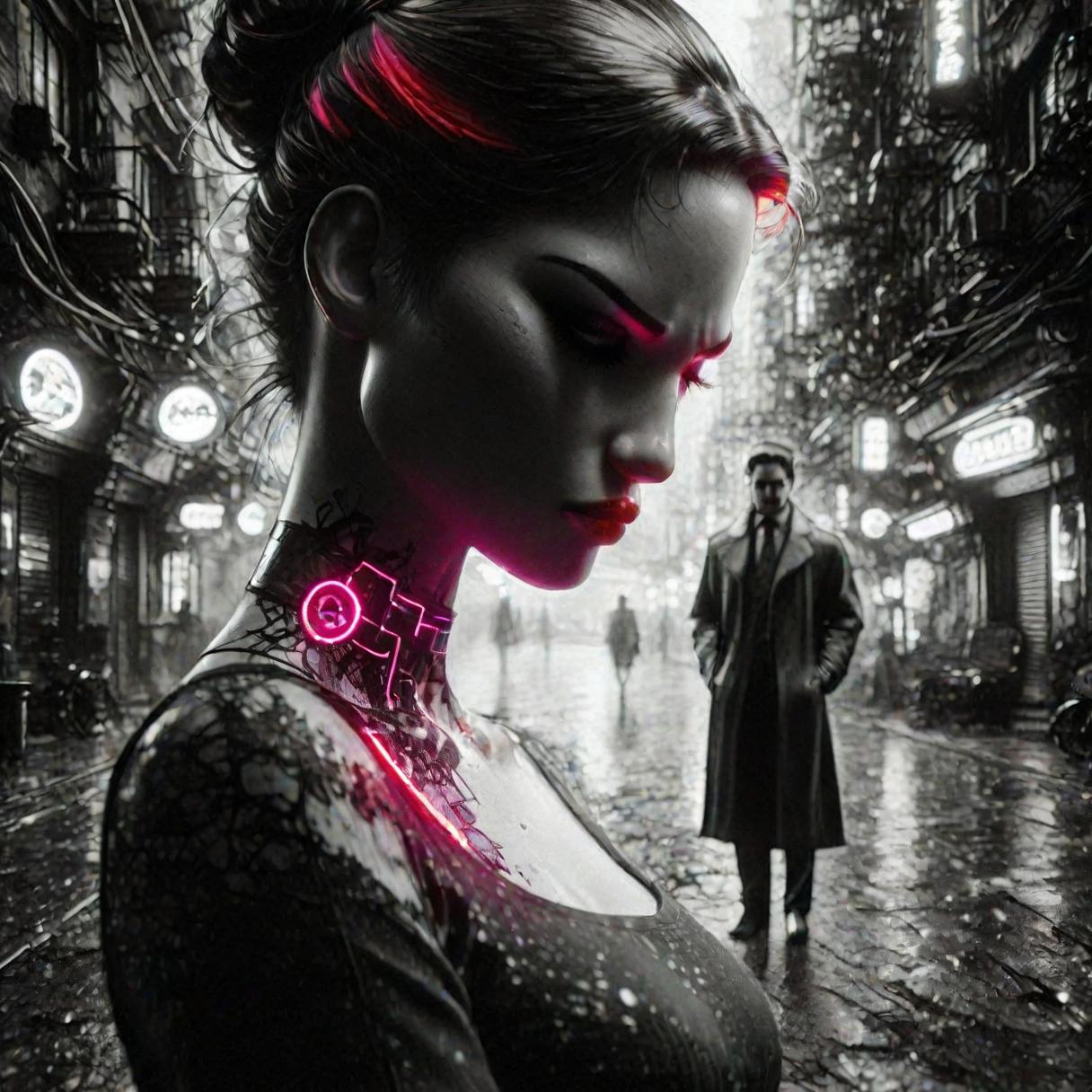
Sample from Night Harbor
Starter look: Night Harbor

How characters are made

A living cast is more than names. FableForge builds groups (guilds, crews, houses, corporations — whatever fits your genre) with a clear hierarchy:

  • Leader — the face and authority of the group
  • Sub-leaders — lieutenants who run teams
  • Members — the people you’ll actually meet in a hallway

Bios, visual tags, outfits, moods, and voice samples are generated so each person can show up in dialogue and in art without looking like a generic stand-in. Unaffiliated locals fill the cracks so the world isn’t only “important NPCs.”

When you step in as the player, the forge folds you into that social fabric — so you have a role, a boss or peers where it makes sense, and people who already have reasons to care that you exist.

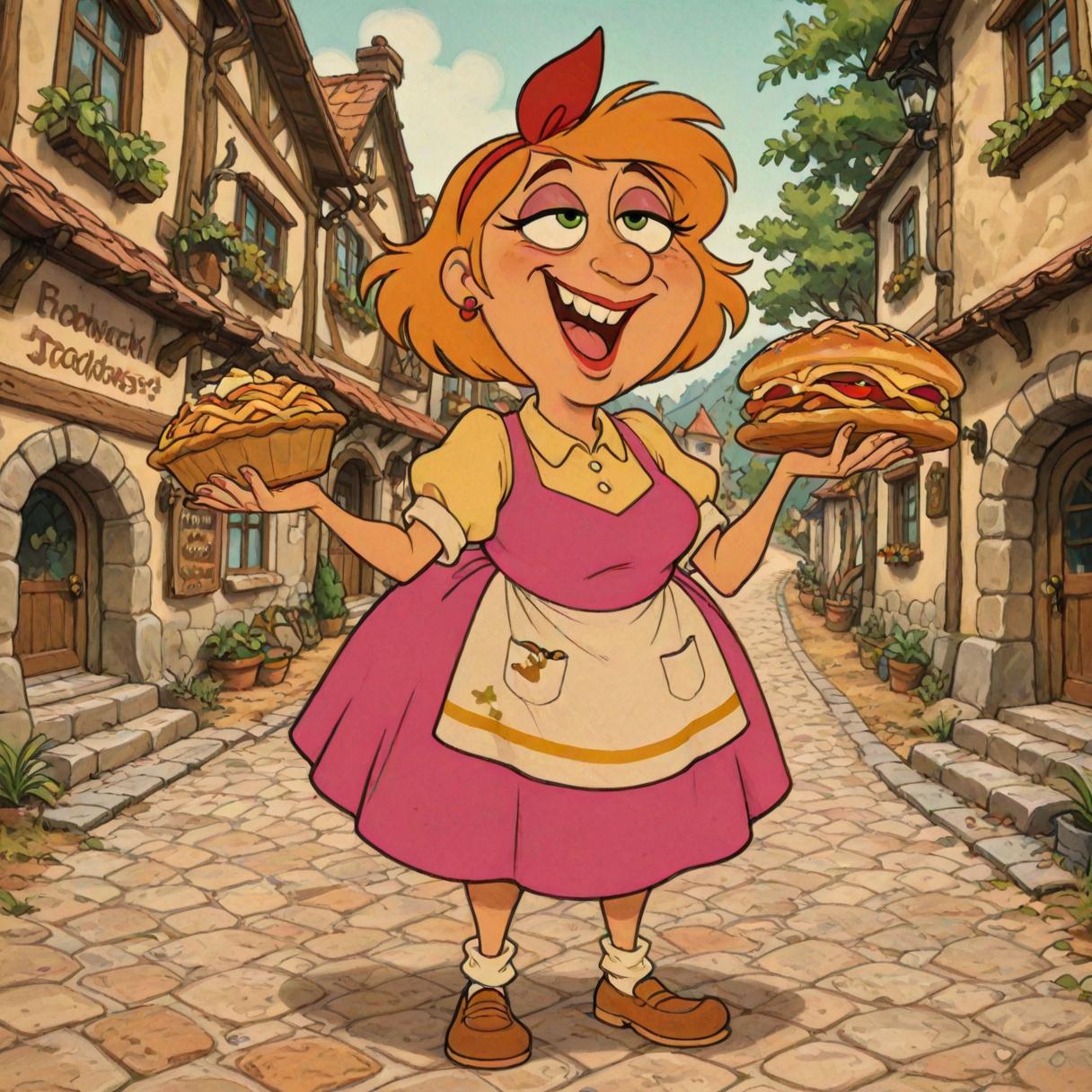
Sample from Gigglewick
Starter look: Gigglewick

How memories are made

Characters do not keep a perfect transcript of every line forever. They keep layers, the way people do:

  • After roughly X relevant turns involving someone, the forge writes a medium-term memory — a short summary of what just mattered. (Default today: about 30 turns; adjustable in settings.)
  • After roughly X medium-term memories, those compress into a long-term memory — durable truths that shape who they are later. (Default today: about 30 medium memories per long one.)

Those memories feed the next conversation. Combined with theory of mind, this is why someone can hold a grudge, misremember your joke, or only know half of a conspiracy.

How relationships are maintained

Every important person doesn’t float alone. The forge keeps a relationship graph: bosses and underlings, peers in the same crew, rivals, soft spots, cold shoulders.

Edges are created when the cast is built and kept consistent as people are added — so a lieutenant’s opinion of the boss isn’t missing just because you met them second. Over play, those ties can shift as memories and events accumulate.

How portraits are made

Portraits aim for the same person across moods and outfits. A base image is posed with strong pose control (we use Pyracanny for reliable body pose), then mood variants are generated so angry, calm, delighted — still look like them.

Face continuity tools keep identity stable while outfits and expressions change. That’s what lets a long webtoon session feel like a cast, not a parade of near-misses.

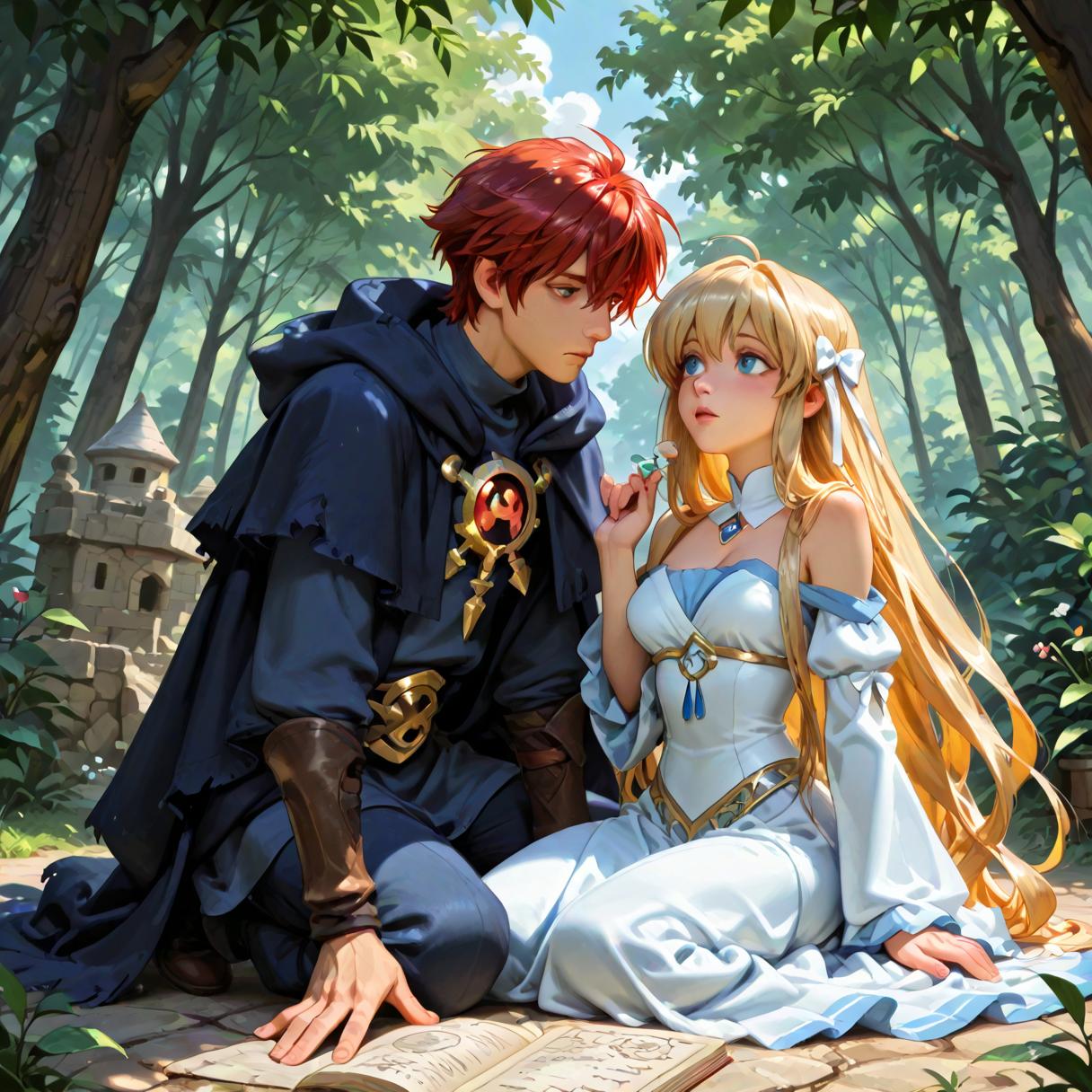
Sample from The Painted Kingdom
Starter look: The Painted Kingdom

How story panels are made

Story panels are the comic frames of the turn. The language model proposes what should be shown; the place contributes its visual tags; and a large library of poses (built with a custom pose tool) drives body language via pose control (again with Pyracanny).

Face continuity carries identity into the panel. The result is a frame that matches the moment — standing, sitting, pointing, running — without abandoning who is in it.

How voices are handled

Each character can carry a short voice sample. Those samples are produced with a custom tool and assigned uniquely so two people in the same scene don’t sound like the same actor with a different nameplate.

At play time, dialogue is spoken in that character’s voice — player lines included — so the webtoon isn’t only visual. It’s something you can hear.

The Narrator and skill checks

The Narrator is your virtual Dungeon Master. When a task has a real chance of failure, the Bullseye machine takes over: difficulty vs the relevant stat, with honest luck in the middle.

Stats are customizable per game. School games might track Academics and Popularity; fantasy games might track Arcana and Valor. The machine doesn’t care what you name them — only that the check is fair and dramatic.

Character creation can use the Fate Jackpot to roll those stats with full reel-spin theater. On the demo page you can roll a stat and pipe it into a Bullseye test, or exercise either machine alone.

Open the Dungeon Master page

Modular anything

FableForge is built so communities can pass around pieces: whole games, single characters, location trees, prompt packs, even custom actions. If it lives as files the engine already understands, it can travel.

The nine sample worlds on the home page are starting templates — training wheels and mood boards. They are not a catalog of “allowed” games. Your forge, your genre, your cast.

Still curious?

The Discord is the best place for deep questions, failed experiments, and showing off a world.